2026-09-30
Back at LOOP, starting with Git
The organization I came back to
I was president of the League of Outstanding Programmers when I was a student. Now I'm its faculty advisor.
I volunteered for the role despite being a part-time instructor. LOOP was part of my own student life, and advising it was a way to come back with something useful to offer.
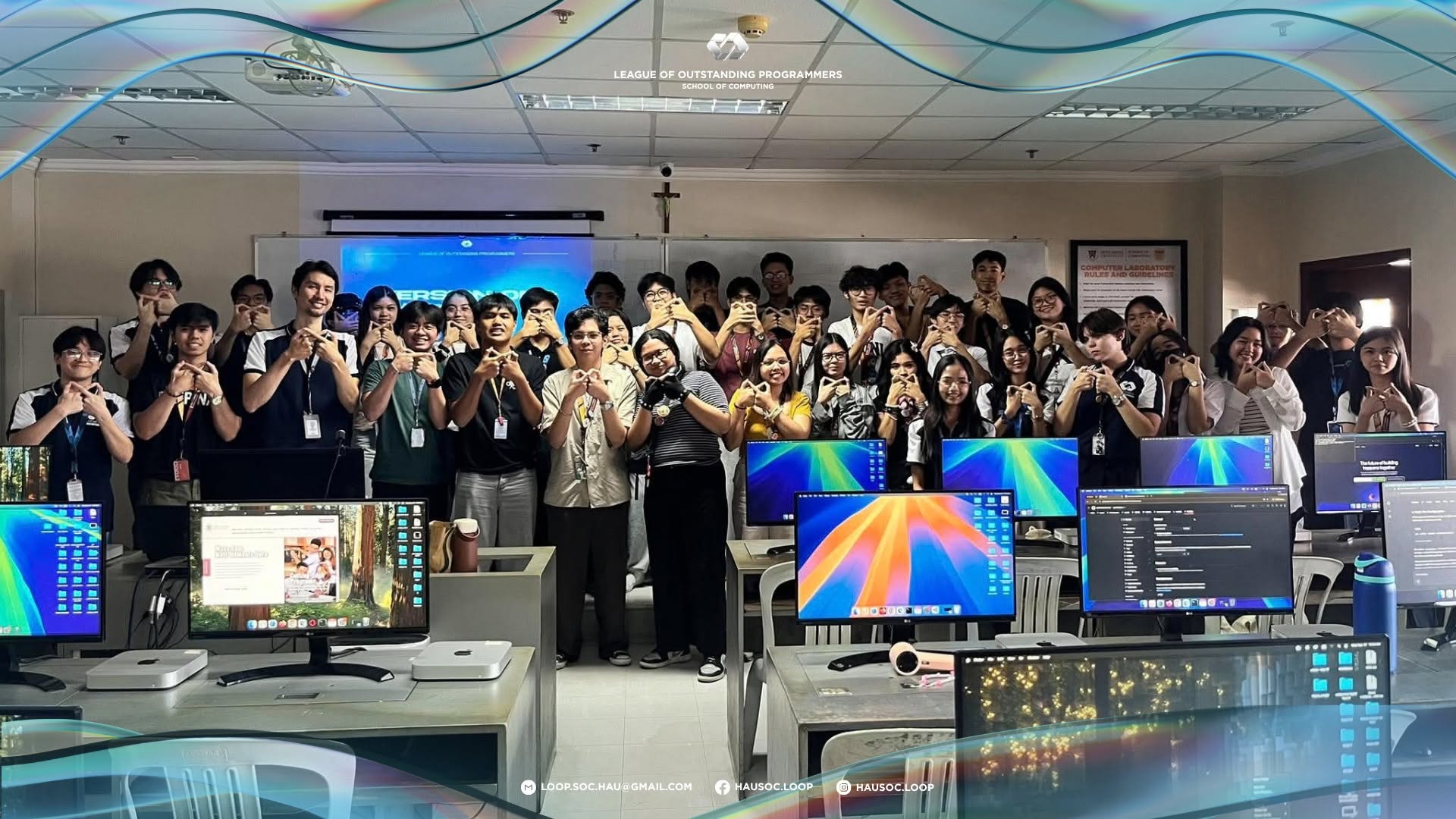
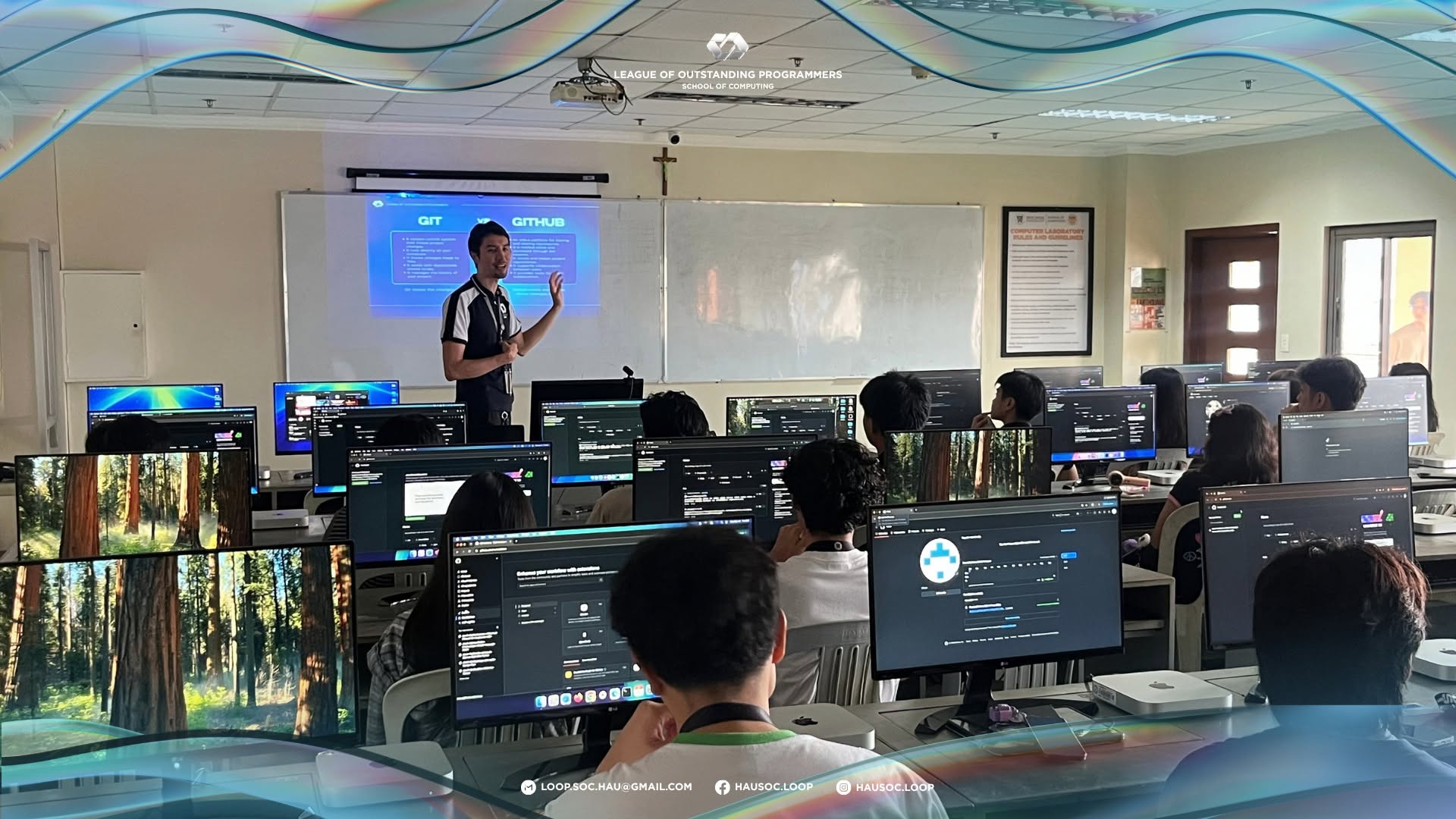
On September 30, that meant leading Version One: A Beginner's Workshop on Git for first-year students at Holy Angel University's School of Computing. Three hours on a Wednesday morning, starting at seven. The day before, LOOP opened another ten slots.
The topic came with some personal history too. When I was a student, we weren't really taught Git. I had to learn it when I was thrown into the professional world, with other people's work already depending on mine.
I wanted these students to have an easier starting point.
Their coursework is already a reason
Git belongs in a student's workflow well before their first internship.
Without it, students often collaborate by manually sending files to each other. Someone has to combine the copies, work gets overwritten, and nobody is quite sure which version is current. It's a terrible way to write code together, and every extra person adds another set of files to reconcile.
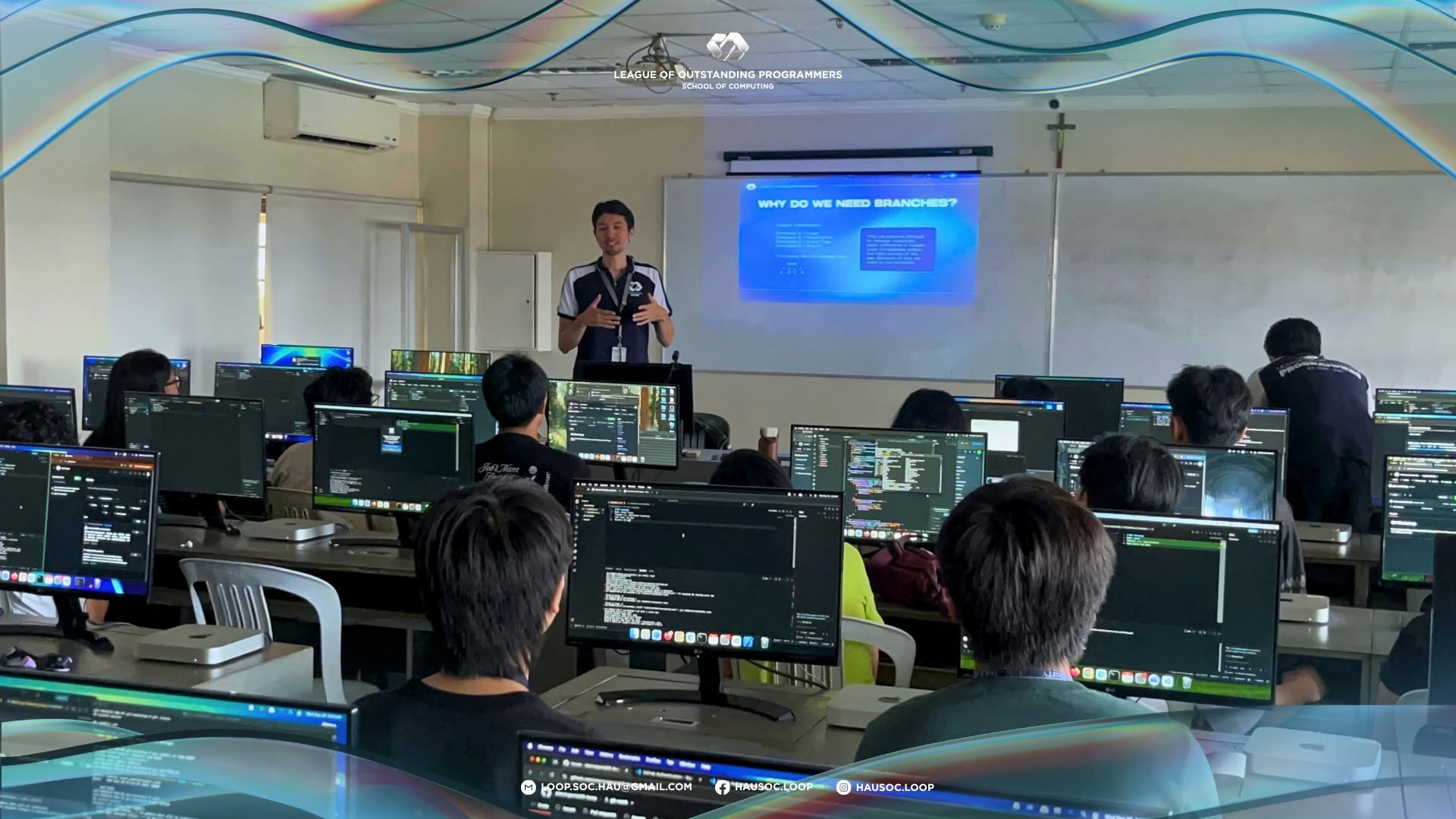
Branches give each person somewhere to work. Merging brings their changes together. GitHub gives the group a shared repository, with a history they can follow instead of a pile of copies they have to untangle.
That history matters when working alone too. Something works, you try another approach, and suddenly it doesn't. Commits give you recorded versions to compare and return to, instead of trying to remember what you touched or keeping a folder full of increasingly optimistic filenames.
Saving work matters too. A local commit records it on your machine; pushing it to GitHub keeps a remote copy. That distinction is worth learning before a laptop becomes the only place an entire semester's project exists.
Learning Git in first year gives students time to practice these habits throughout their coursework. Each group project becomes another chance to get better at collaborating.
The same habits follow them into work
We worked through creating repositories, making commits, branching, merging, and pushing code to GitHub. The session was hands-on because students need to see what each action does to their own work.
In a professional team, those actions are part of the working day. Your changes need to be readable by someone else. Your work needs to fit alongside theirs. When something breaks, the history helps the team work out what changed.
Knowing Git gives a new developer a way to participate in that process. They can share a change for review, follow the history of a project, and work on a feature while their teammates work on others.
By the time these students join a team professionally, the tool can already be familiar. They'll have enough to learn about the job without having to learn version control at the same time.
From president to advisor
Being the advisor puts me in a different position from the one I held as a student. The officers run LOOP. I can bring what I've learned since leaving it, including the things I had to learn later than I should have.
Thanks to the officers for organizing the workshop, and to the first-year students who gave it their Wednesday morning. The LOOP recap includes photos from the session, captured by Justine Larioza and Mark Galvez, with layout by Eriz Tungul.
I learned Git when the job required it. Coming back to LOOP gave me a chance to help the next batch learn it sooner.