2026-03-28
The prize we gave out was not for the best demo
Sponsor, speaker, judge, all in one afternoon
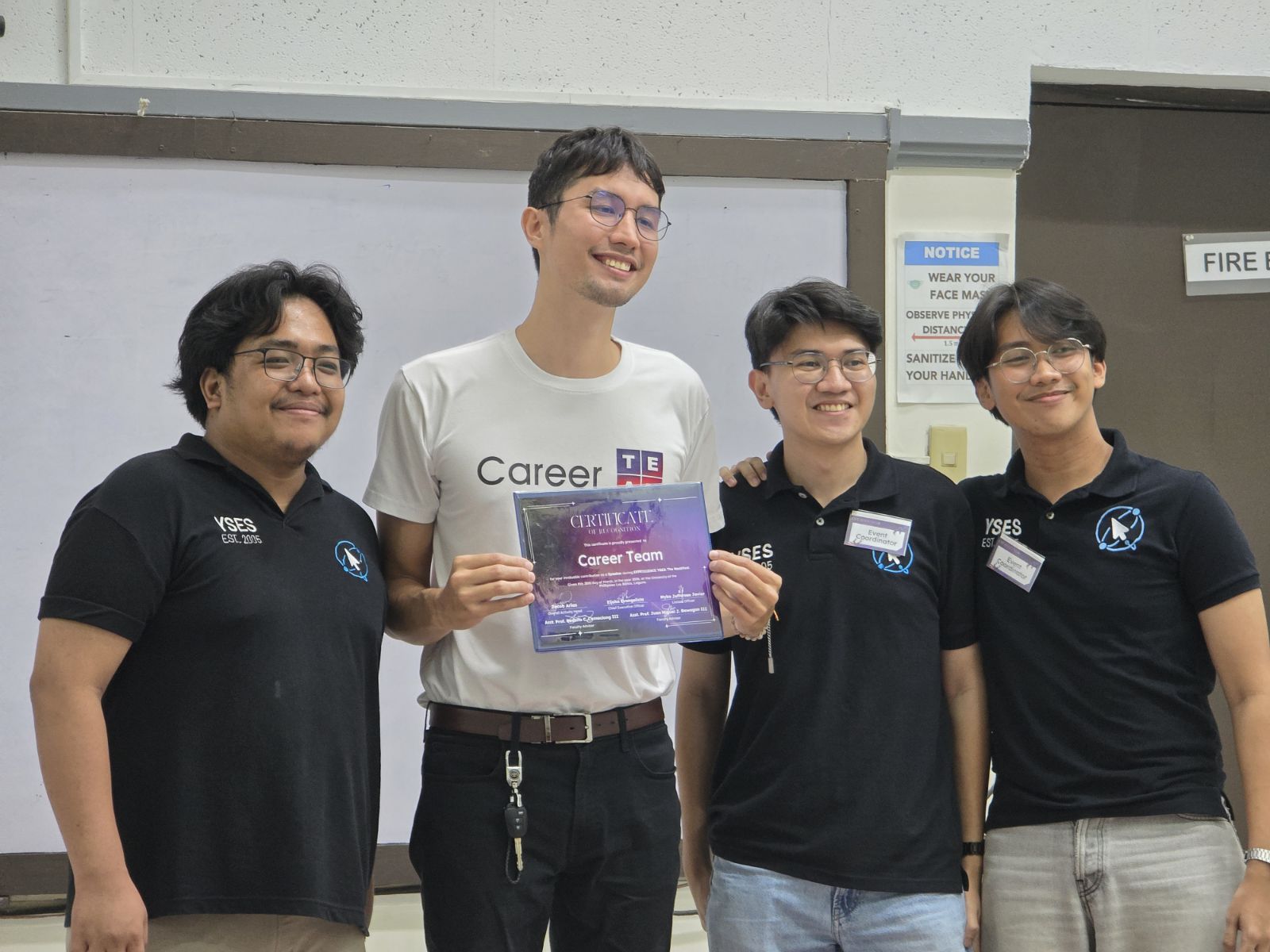
Career Team came in as a premier sponsor of EXPE21ENCE: The Hackfest, which bought a talk slot and a special prize with our name on it. I went with fellow team leads Christelle Salceda, Jun Bolotaolo and Beili Cepe.
Worth putting the conflict on the table early. I was not a neutral judge. I was a sponsor's representative handing out a sponsor's award against a sponsor's criteria, and the criteria were ours. Read everything below with that in it.
What the criterion actually was
Career Team's platform is Career Edge, and the clients are United States state workforce agencies and universities. The people at the other end are veterans, people with disabilities, people coming out of incarceration, people without stable housing. That is the population the whole company points at, and the shorthand for it inside the company is a phrase that ended up as the name of the prize: accelerating the human condition.
So the award carried that name, and the question behind it was not whose demo held together best. It was: who did you build this for, and can you point at them.
Two teams could
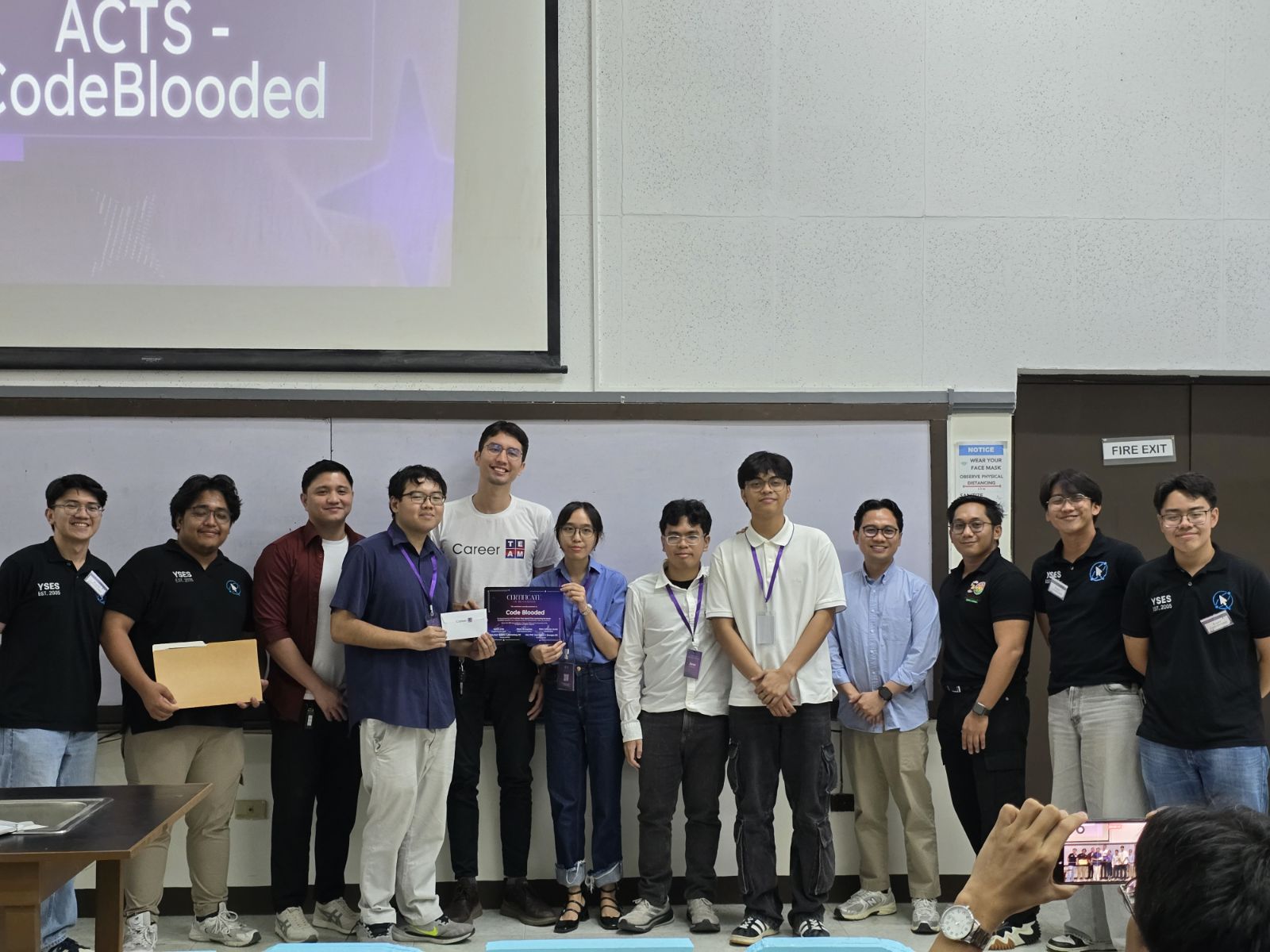
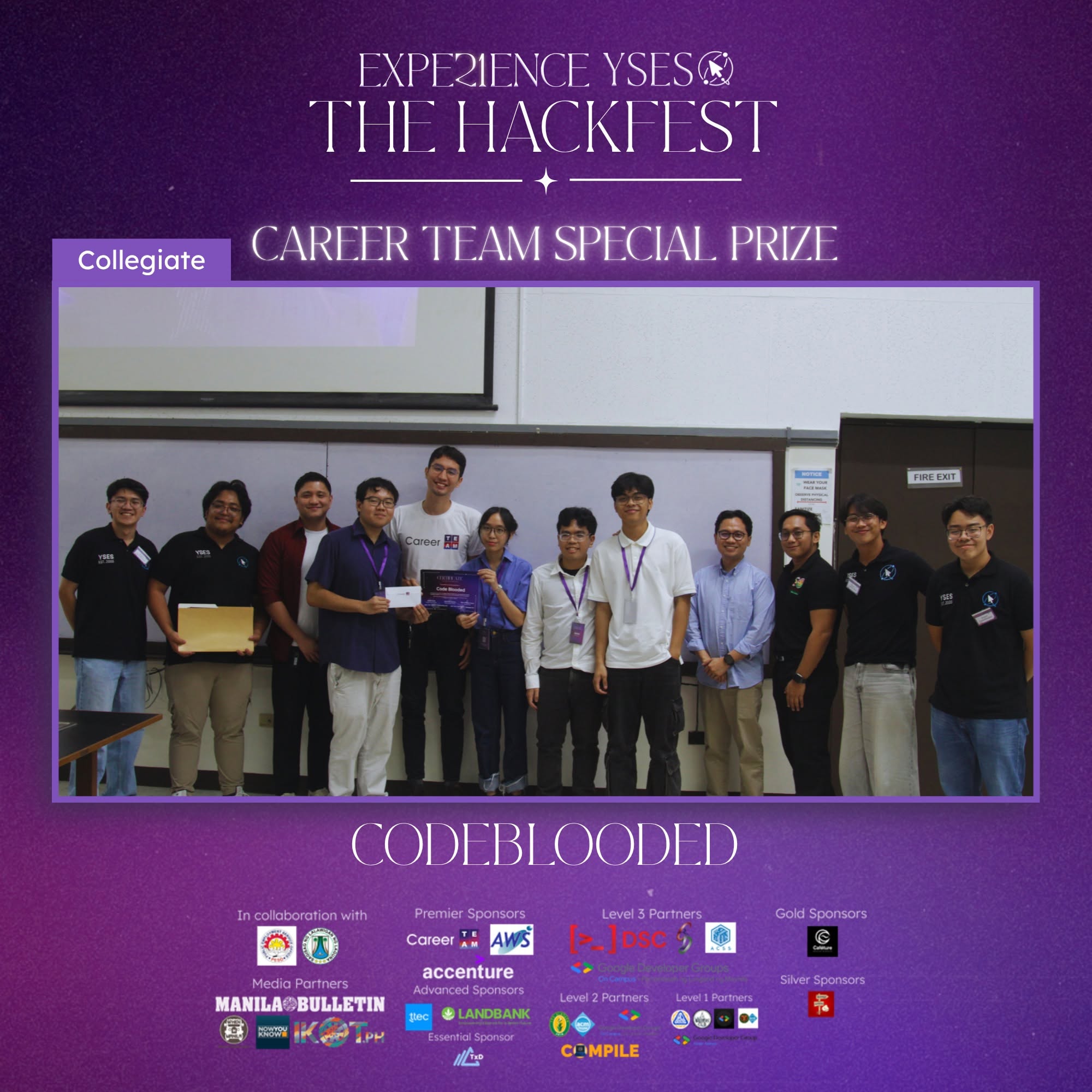
ACTS, the AI Civic Triage System, from team CodeBlooded. A resident chats or posts on the Facebook page their local government unit already runs. The system reads the report, classifies it as a road accident or whatever it is, and drops it onto a map that the people who have to respond can actually work from. The app is on the government side. The public side is the page they were already using.
That last part is the whole reason it won. The reflex in a hackathon is a new app, a new website, a new account for somebody to create and forget. This team went and found where their users already were and built behind them instead of in front of them. Serving people where they are is unglamorous and it works.
CodeBlooded was Neil Aldous Biason, Christian Naguio, Jaren Marcelino and Adara Rei Dimatulac.
Something I only learned afterwards, from Neil's write-up: they came in through the wildcard round and built the thing in three days. I did not know that while I was judging, and it does not change the decision, but it does change how the decision reads.
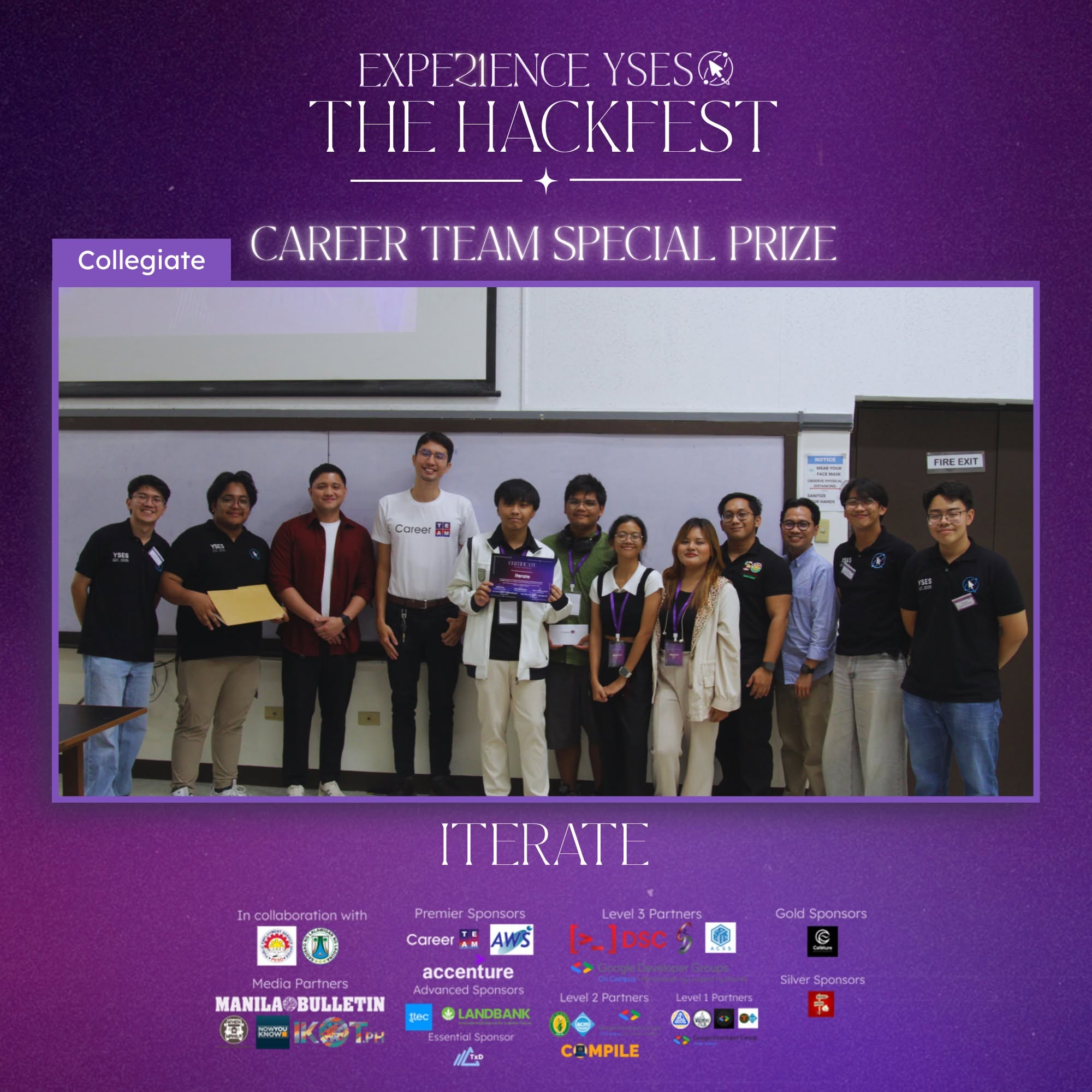
Pathag, from team Iterate. Walking routes for people with visual or mobility impairments, in cities that were not built with them in mind. Computer vision plus community crowdsourcing to map the obstacles that no routing service knows about: the open hole, the broken kerb, the blocked pavement. It recalculates a safe route, talks you through it, and then aggregates the same data into what they called heatmaps of inaccessibility, which is a polite way of saying evidence you can take to the local government to get the pavement fixed.
That second half is the part I liked. Most accessibility tools help you cope with a broken city. This one also documents the breakage and hands you an argument.
Iterate was Galvin Gonzales, Aro Caabay, Hanna Macasarte and Rein Matthew Malonzo, the one name across both teams I could not find a profile for. He is here anyway. A missing link is a gap in my searching; a missing name would be a person cut out of their own work.
Iterate took the collegiate championship as well, and CodeBlooded took second runner up. Both of those were the organizers' calls, not ours, and the full board across both brackets is theirs to announce, so it is worth reading rather than taking my two names for the whole field.
The slide, and the sentence I have been writing for a year
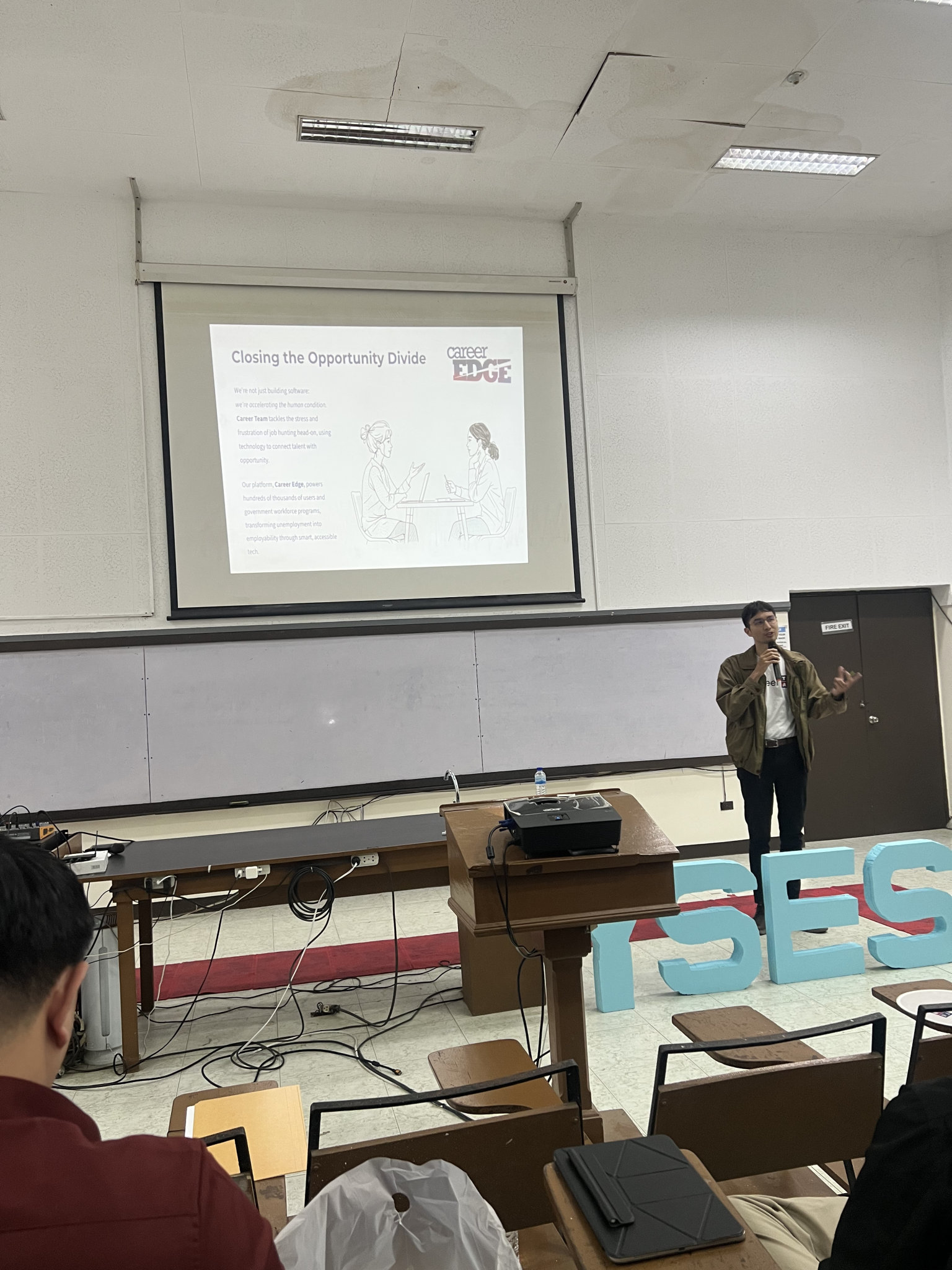
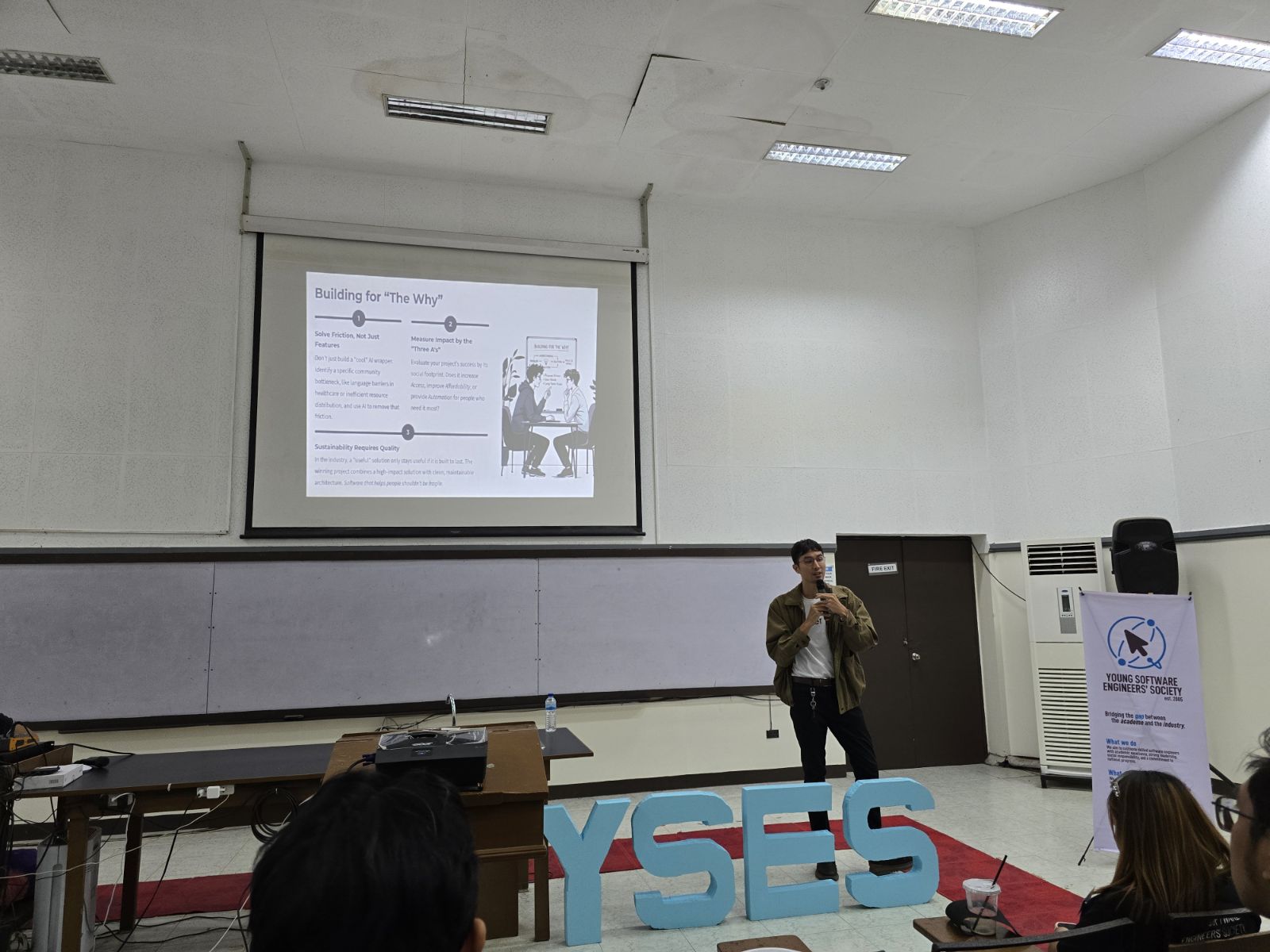
My talk was Engineering for Social Impact: Building Sustainable Careers, and the deck is at the top of this page. Two slides carried it.
The first was called Building for the Why. Do not build a cool AI wrapper, find a specific community bottleneck and use the technology to take that friction out. Measure the result by whether it increases access, improves affordability, or automates something for the people who need it most. And then the one hackathon projects usually skip: a useful solution only stays useful if it is built to last. Software that helps people should not be fragile.
The second slide is why I keep coming back to this deck:
We don't hire "prompt engineers", we hire problem solvers. Don't let AI dictate your architecture. We value developers who understand foundational logic and can solve complex problems from first principles. AI just helps us type the solution faster.
That last sentence sits about a centimetre from the line at the bottom of every note on this site: the judgment is human, the typing, by design, is not. Which is less of a coincidence than it looks, because I wrote the deck. So this is not two sources agreeing, it is one person saying the same thing twice, and you should discount it accordingly.
The signature is the part I did not supply. Career Team agreed to put that on a hiring slide and stand behind it in front of a room of students it might actually hire. An opinion on my own site costs me nothing. The same sentence in a recruiting deck is a promise somebody can hold you to at an interview.
The same slide adds the part people miss: hiring is going up, not down. The human element gets more valuable, not less, once the boring half is automated. That is ten times zero with a recruiting budget behind it.
What I would flag
The prize was ours, the criteria were ours, and I was the one holding them. A special sponsor award is a company saying what it values out loud, not an objective ranking, and it should be read that way. The organizers' placements are the ones that were judged on the merits by people with no commercial interest in the result.
I also saw these projects as demos on a stage, at the end of a hackathon, in the state hackathon projects are in. Both of them are ideas with a working slice attached. Whether either survives contact with a real local government or a real user with a white cane is a question the weekend could not answer, and neither can I.
Thank you to YSES, the Young Software Engineers' Society at UP Los Baños, for the invitation and for the event itself. The Hackfest is part of EXPE21ENCE, their twenty-first year of this, and running two brackets, a wildcard round and a full day of pitches on schedule is a considerable amount of work to do on top of being a student. They also fed and watered a room of sponsors and kept the whole thing to time, which is the part nobody thanks anyone for.
Sitting on that judging panel was a privilege, and the certificate they handed us is on the wall. The job fair and company talks end of the same programme has its own post.