2026-03-19
A booth in the morning, a stage after lunch
The day job, for once
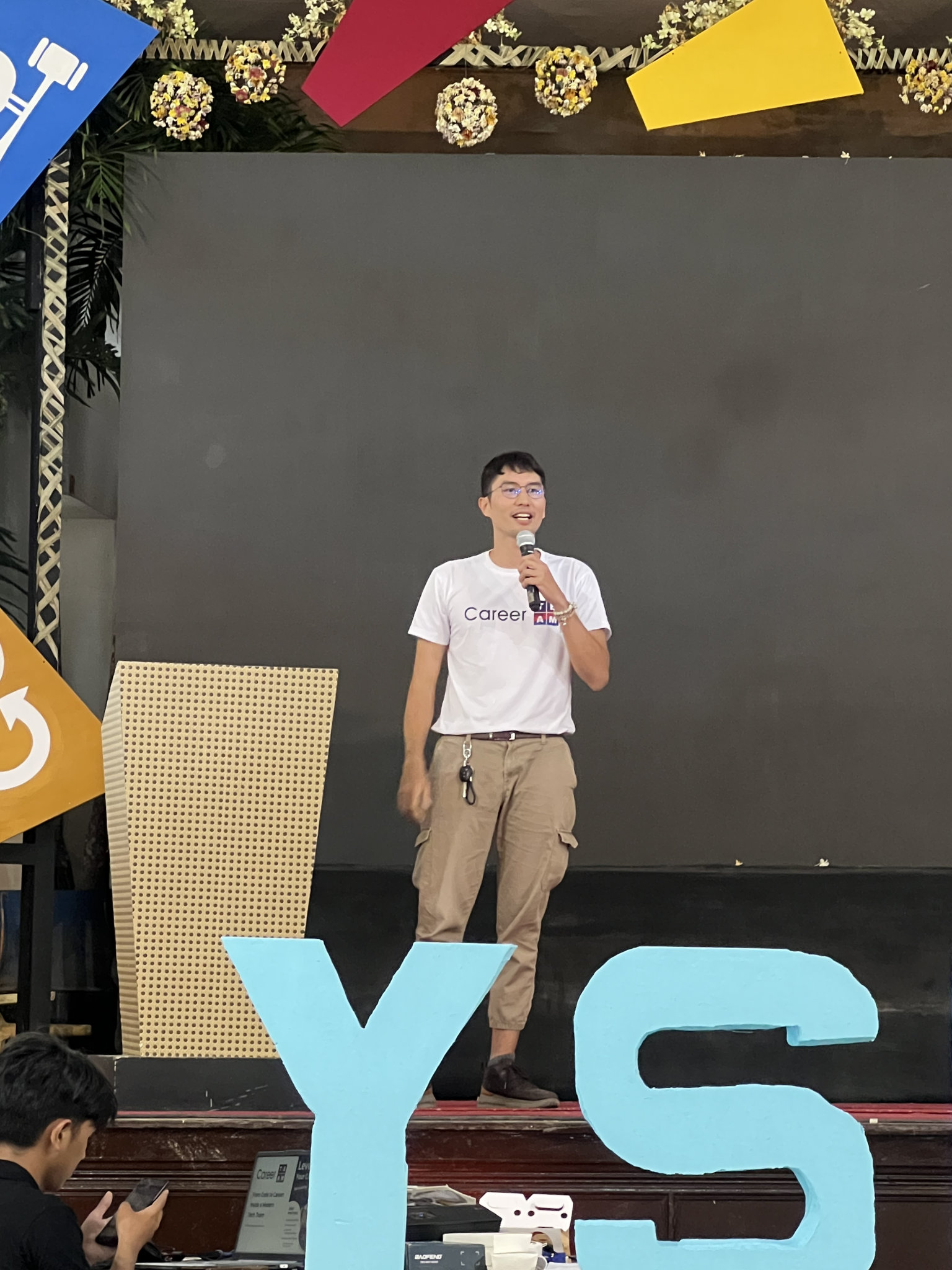
Almost everything on this site that involves students involves me teaching them. This was the other one. Career Team is my full-time work, where I am a technical lead, and the teaching is the part-time half of the week even though it is the half people ask about. On this day the full-time job was the one holding the microphone.
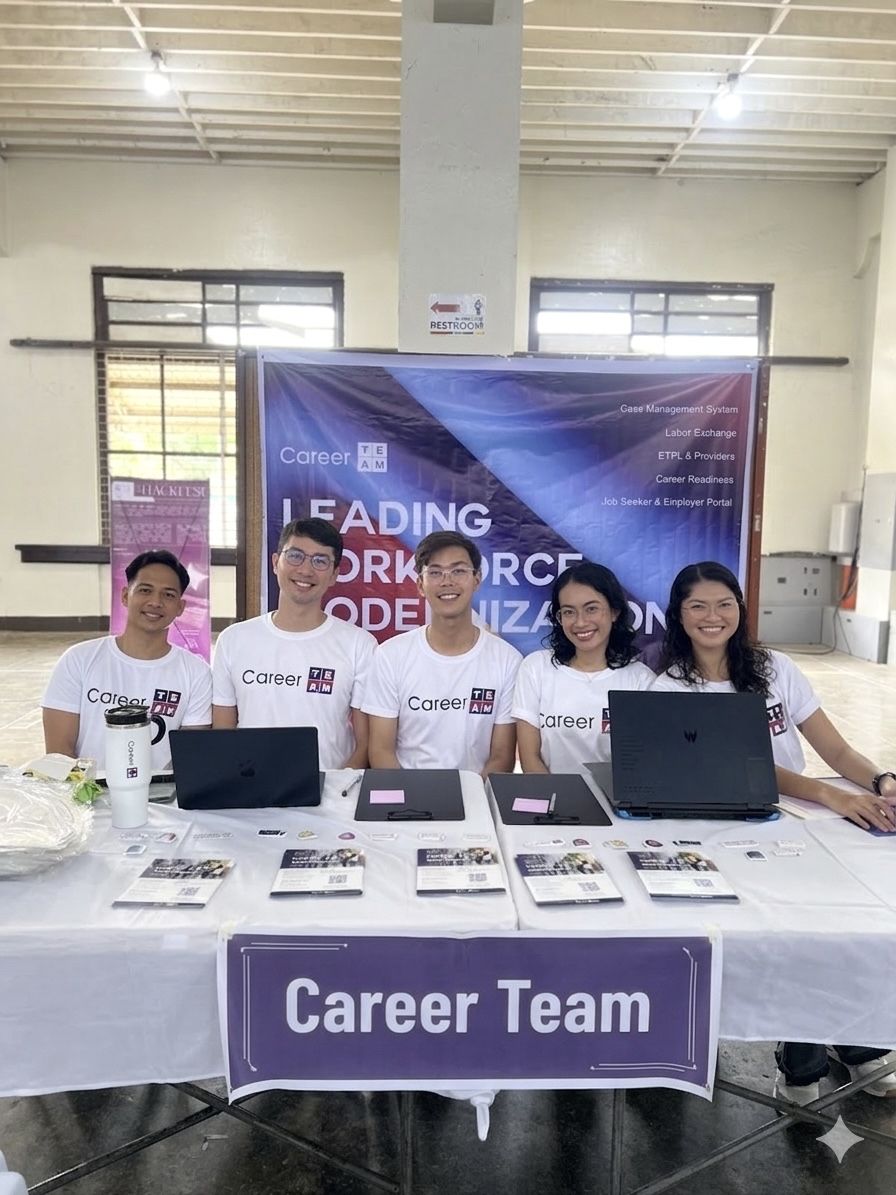
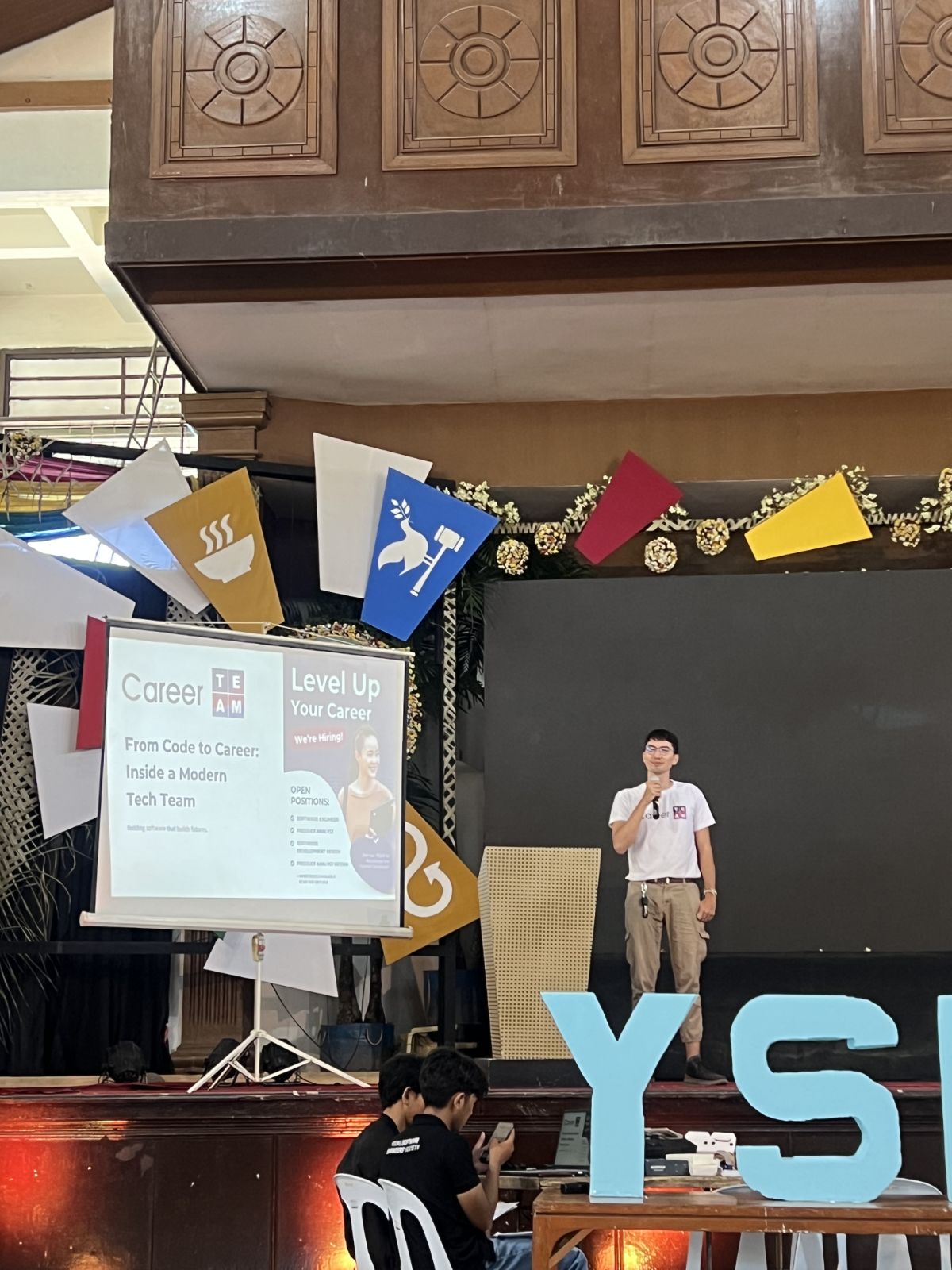
Two slots, same campus, same afternoon. A booth at the Practicum Fair and Job Fair, then a stage at Company Talks. Both of them are recruiting. Saying so up front is cheaper than letting a reader work it out and wonder what else was quietly reframed.
130 names, and what that number is not
That is the count off the booth sheet. It excludes the students who handed over a resume and walked on, and the ones who scanned the QR code for the job postings and thought about it later. So 130 is the floor and I have no idea what the ceiling was.
It is also not a result. 130 people wrote their names down. That is not 130 interviews and it is certainly not 130 jobs, and any recruiting number quoted without that caveat is being asked to do a job it cannot do.
Five of us behind one table, all team leads: Christelle Salceda, Jun Bolotaolo, Beili Cepe, Jake Regunay, and me. Students came from across the region, not only the host campus. Almost none of them asked about pay. They asked whether we take interns and what they were expected to already know, which are better questions than the ones I was asking at their age.
The slide I actually stand behind
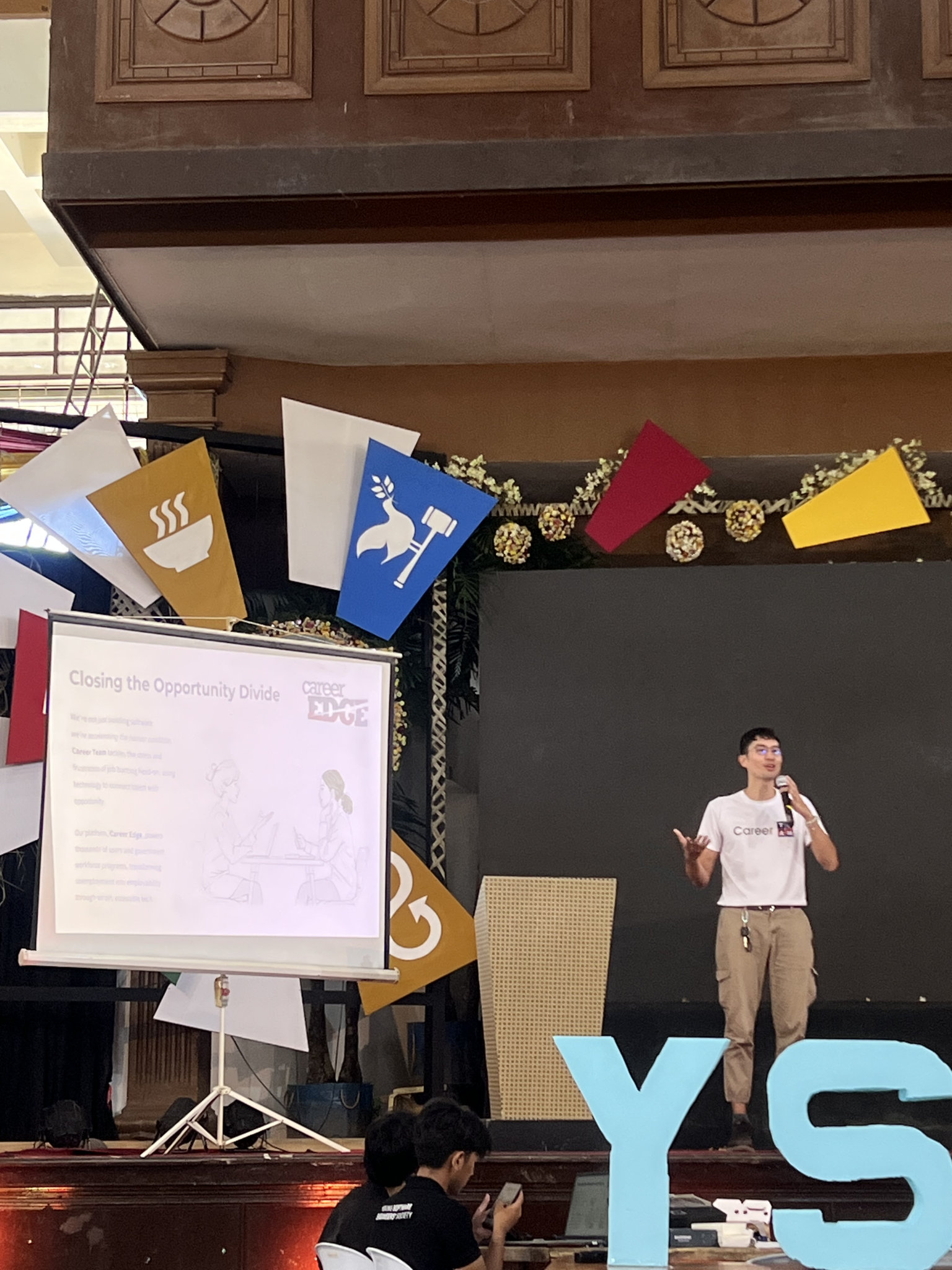
The talk was called From Code to Career: Inside a Modern Tech Team. The deck is at the top of this page, so you can check me against it rather than take my summary.
One slide is the reason I was glad to give it:
We aren't looking for "AI-prompt engineers". We are looking for developers who are already smart. We hire for foundational logic and the ability to solve complex problems from first principles.
Next to it, AI as a multiplier and not a crutch: use it to move faster, do not lean on it to find the solution. And above both, the claim that hiring is going up rather than down as these tools arrive.
Full disclosure, since it would be easy to read that slide as somebody else backing me up: I wrote the deck. It is the same argument I make at length in ten times zero, put in front of the people it is actually about.
What is not mine is the sign-off. A company agreed to say that to a room it recruits from, which turns an opinion into something a candidate can hold it to. And it holds in exactly the room where a student most wants it to be false, because from a lecture hall the shortcut looks extremely available.
The company, for anyone deciding whether to apply
Career Team builds workforce software: the systems that sit between a person who needs work and a program built to help them find it. Since 1996, mostly for the United States. The platform is Career Edge. The deck's own figures are over a million job seekers served, more than five hundred campuses and forty-three workforce centers, and I am repeating those as the company's numbers rather than presenting them as something I measured.
The stack is MERN with Next.js, which for this room was the useful detail: the same tools they are being taught, running in production instead of in a course project.
The closing advice slide has three items. Build in public. Stay curious. And do not chase every new framework, learn JavaScript deeply, build a foundation that lasts decades rather than months. That last one landed on the screen almost exactly a year after I spent an afternoon teaching a room a new framework. Both are true at once. The framework gets you past the screening; the foundation is what you still have when that framework becomes somebody's migration ticket.
The honest limits
I was selling. Every line in that deck about mentoring, about interns shipping production code from day one, about the no stupid questions policy, is a company describing itself. I believe it or I would not have stood up with it, but a talk is not evidence, and a student should treat the whole thing as a list of questions to ask rather than a set of answers.
I also had a microphone, a stage and nobody with a rebuttal. Comfortable place to be right from.
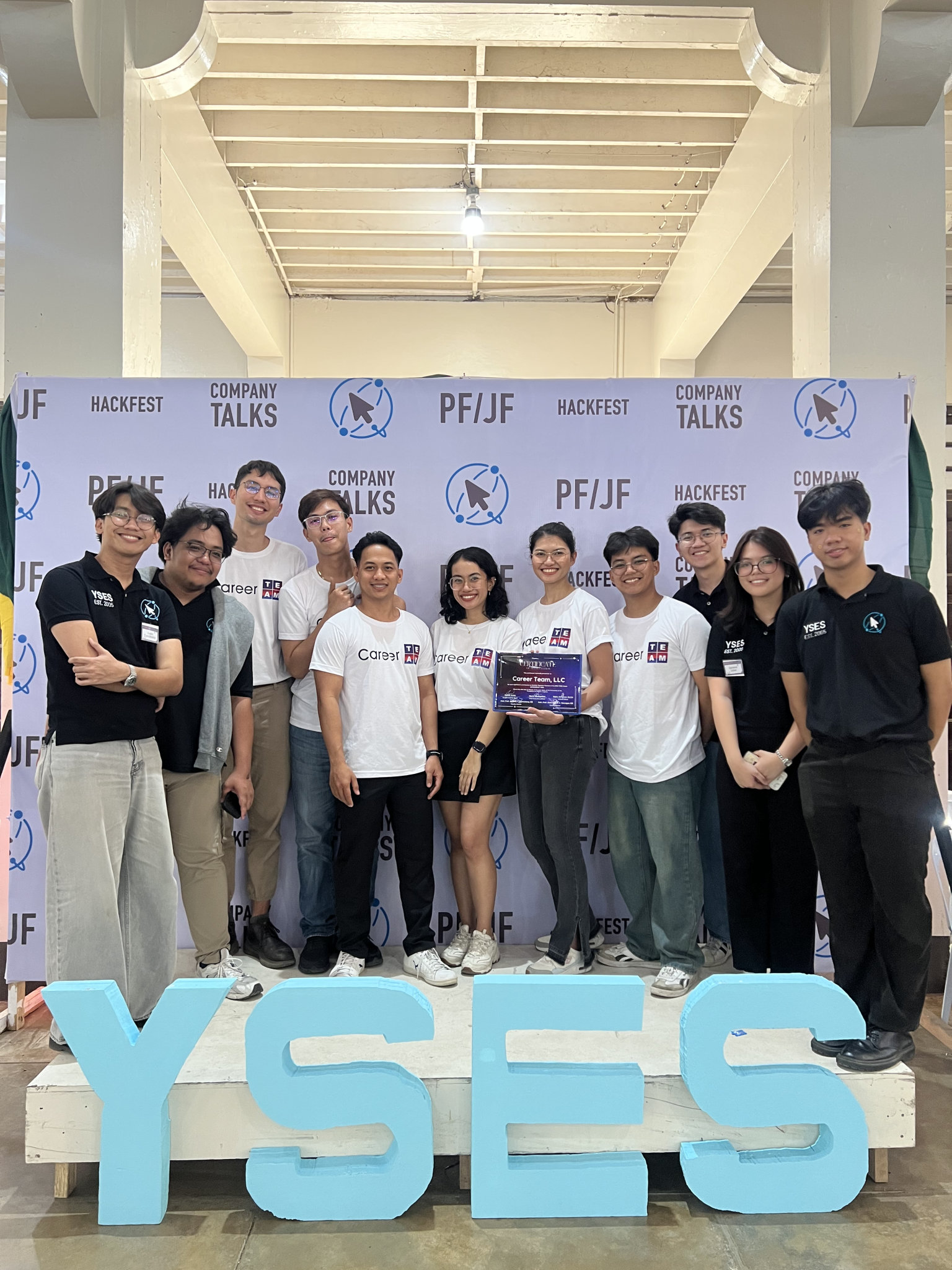
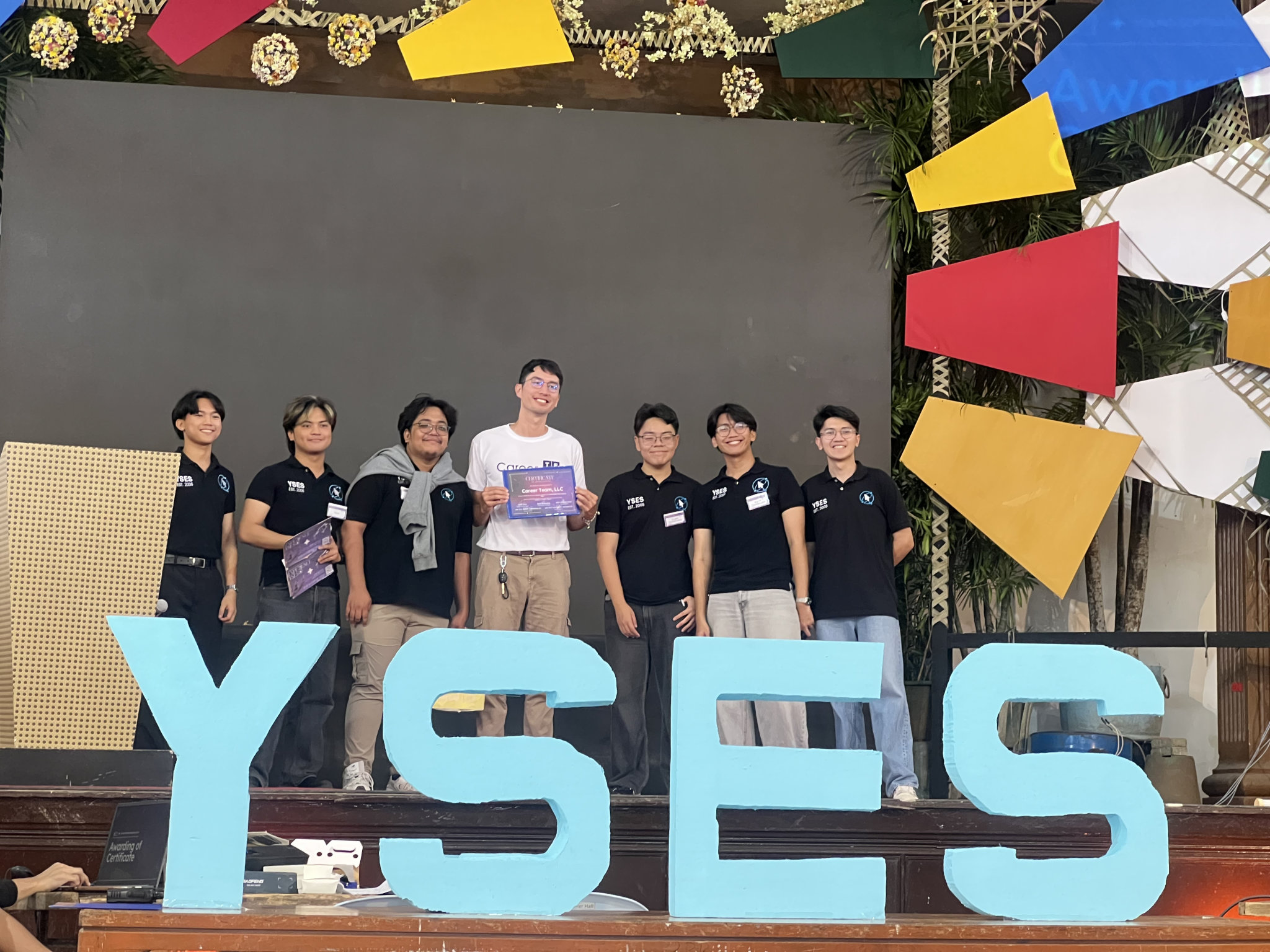
Thank you to YSES, the Young Software Engineers' Society at UP Los Baños, for having us. EXPE21ENCE was their twenty-first year of this, and it is not a small thing: a job fair, a hackfest and a day of company talks in one stretch, with AWS Philippines and Accenture in the other speaking slots, sponsors to wrangle, a venue to fill and a schedule to hold. The officers did all of it between their own classes, and the only reason I got a stage and a table full of students to talk to is that they built both.
The hackfest end of the same programme has its own post.