2026-08-08
Don't vibe anything you can't code yourself
Saturday night, and they showed up anyway
Seven in the evening. On a Saturday. That's when about 60 students got on a Google Meet for their general assembly, which is either heartening or proof that I should have been funnier.
Three of us split the same question. Louella Salenga took the ethics of AI in learning and teaching. Marc Samuel Pabilona took security in the age of AI. I got the one that sounds like a compliment until you look at it: vibe coding.
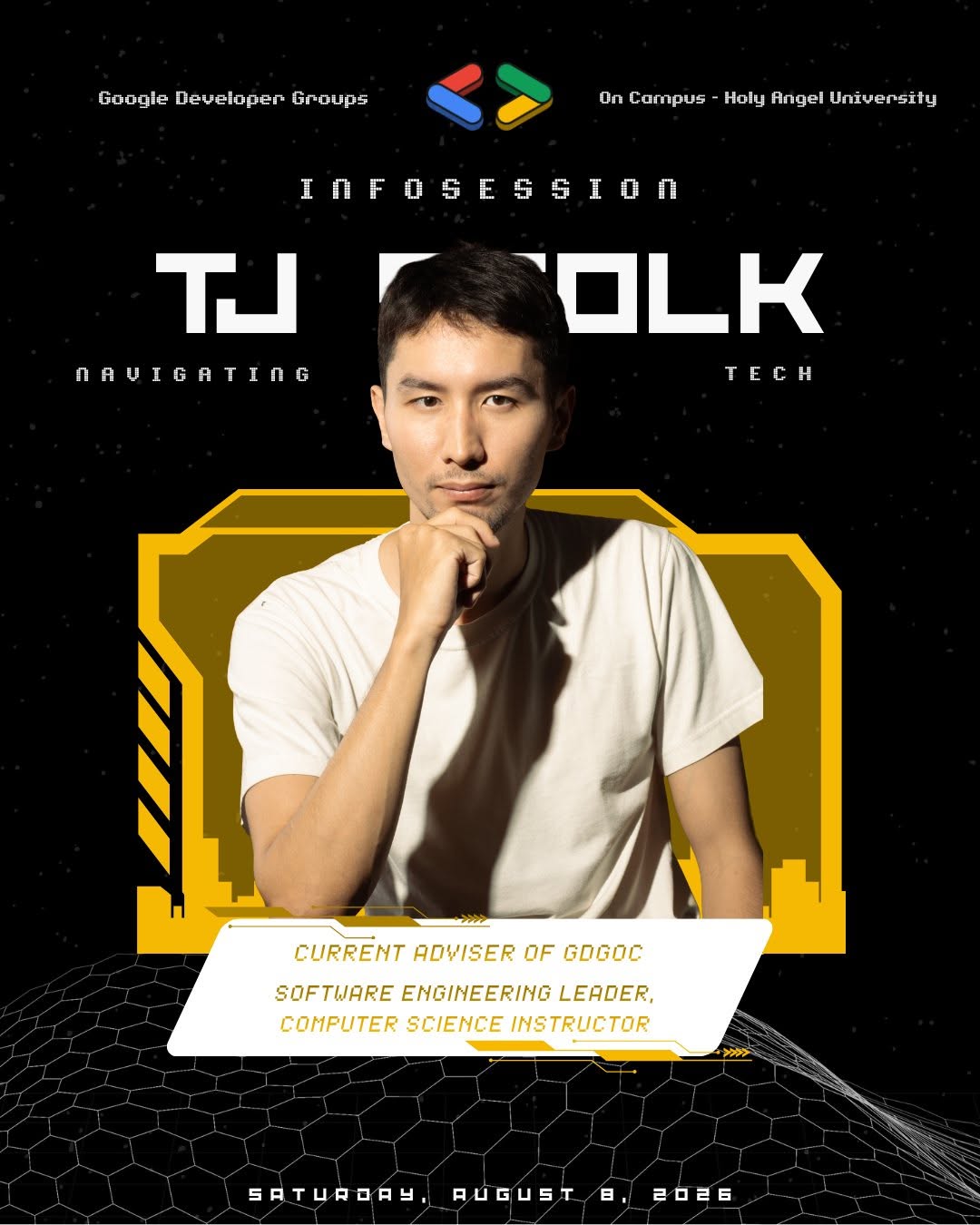
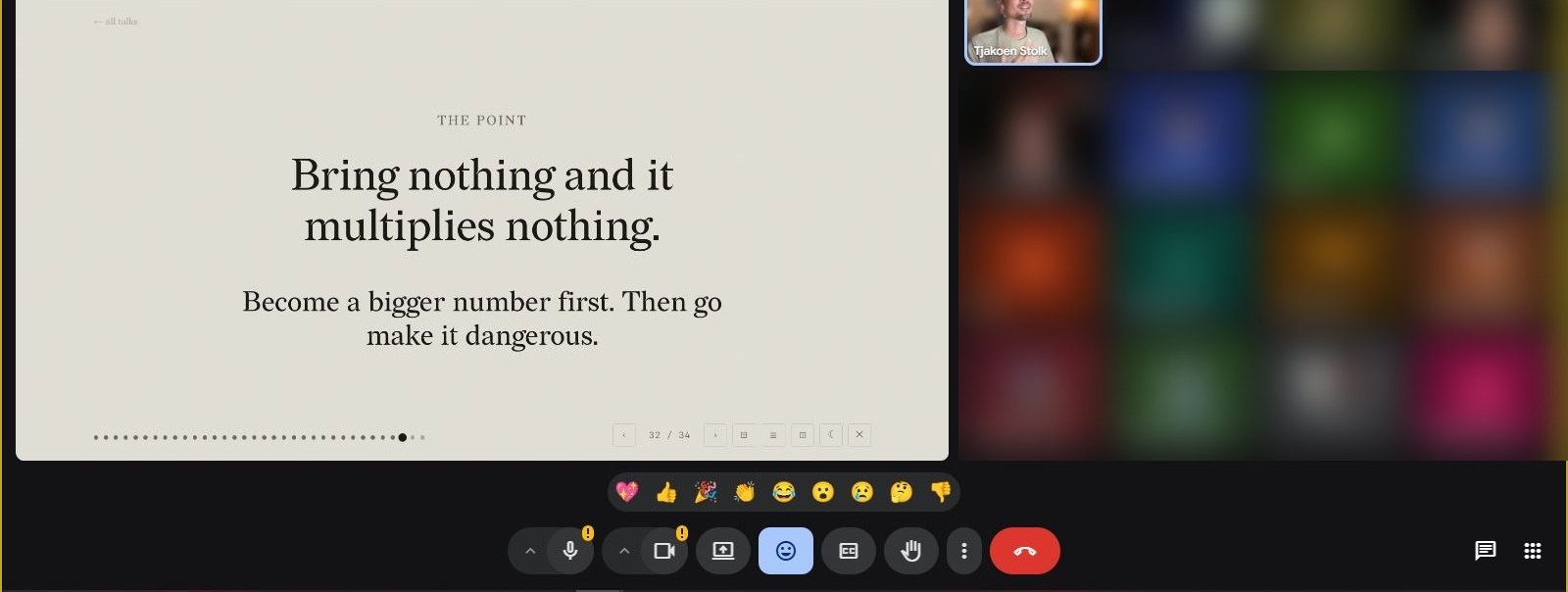
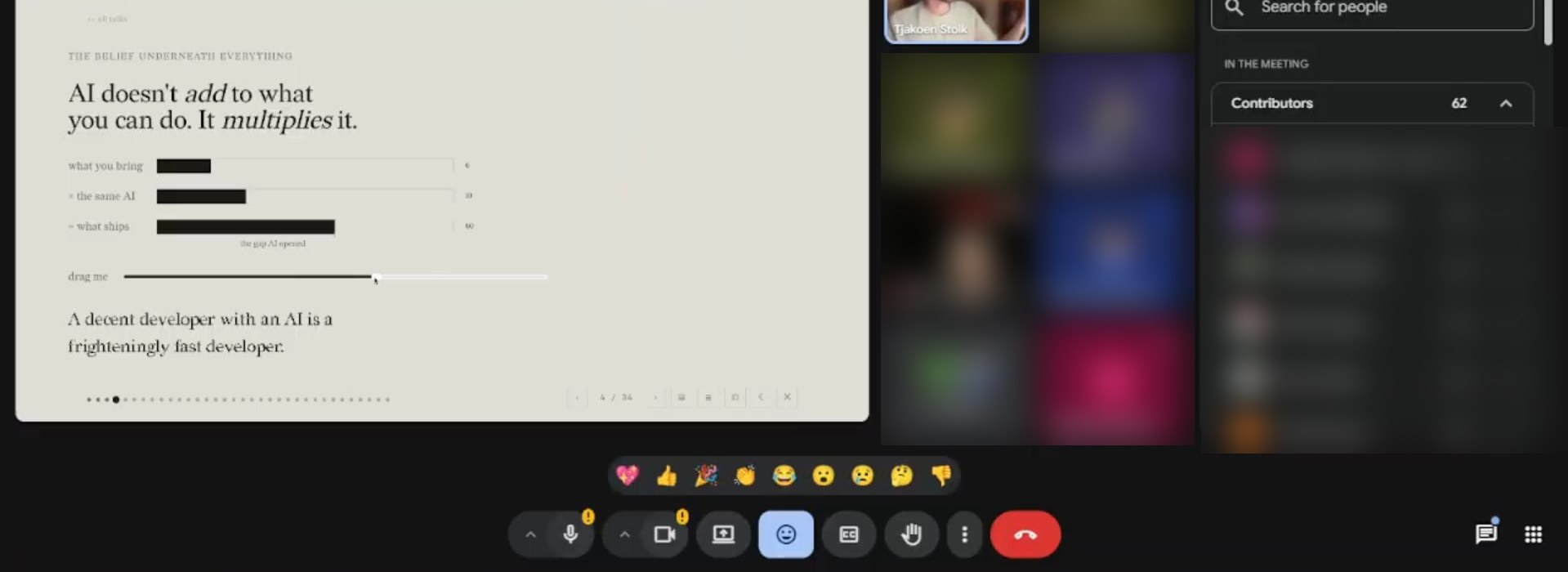
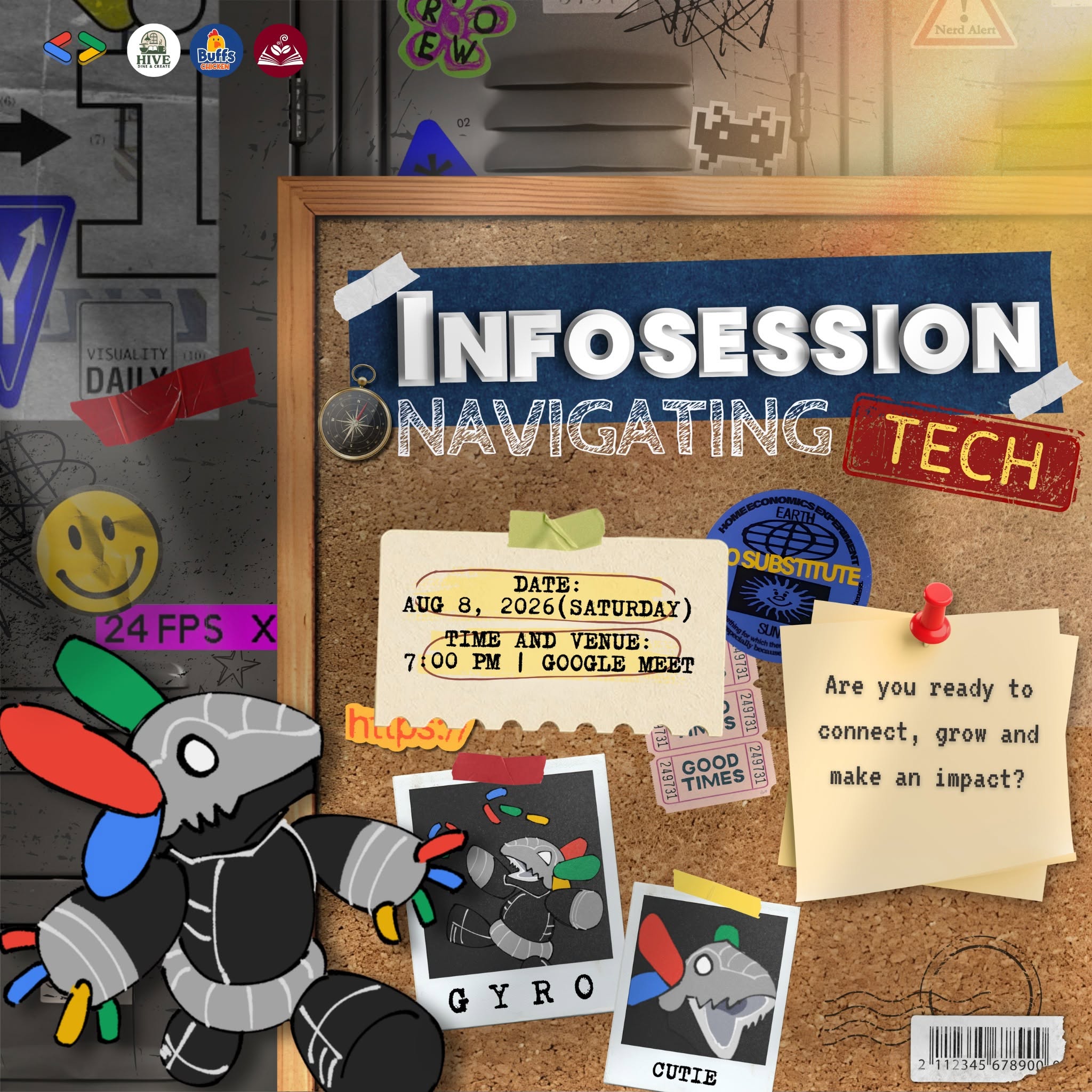
The two wide pictures up top are from the call itself, mid-slide, with the room down the right side, faces blurred because none of those students signed up to be on my website. The other two are the organizers' work, not mine: the speaker card they posted announcing me and the poster from the event post. They are visibly better at posters than I am.
What I actually argued
I didn't bring a theory. I brought my own year: what I hand to a model, what I refuse to hand over, and the couple of times I moved very fast in completely the wrong direction because I didn't read what came back. It's a short talk with one idea under it.
AI is a multiplier, not an addend. Ten times zero is still zero.
Give a strong developer an AI and you get a frighteningly fast strong developer. Give the same AI to someone who hasn't learned the thing yet, and you get a very fast nothing, delivered in a language they can't debug. Same tool. The variable was never the tool.
So most of the talk was the unglamorous half. Read what it hands you. Prove it before you ship it. Keep getting better at the thing you're handing over, because the day you can't check the work is the day you're not really the one doing it.
Then someone asked the good one
In the Q and A a student asked exactly what I was hoping someone would: with vibe coding around, what should a student actually do to skill up?
My answer was boring, and I told them it would be boring before I gave it, because it hasn't changed since before any of this existed. Ace your classes. Build things nobody assigned you. Use the model to understand something faster, not to hand in something you can't read.
Don't vibe anything you can't code yourself.
Not because using AI is cheating. Nobody's grading you on typing. It's that the minute the generated thing breaks, the only person who can save you is the version of you that understood it, and you either built that person or you didn't.
Vibe your own stuff, not the payroll
Vibe code your own projects. Weekend tools, side apps, the thing you're building because you want it to exist. That's the right place for it, and I do it too.
Production is a different job. Enterprise software carries compliance, security and reliability, plus the phone call at two in the morning, and none of that gets answered by vibes. It gets answered by someone who can read the diff, name the failure mode, and stand behind it with their own name on it. That's why we hire coders, not vibers. Nobody's paying for prompts. They're paying for the judgment that survives contact with a real system.
The honest limit
This is a talk, not evidence. I can tell you what I've watched teams do well and badly, and I can show my own receipts, but I haven't run a study on students and I'm not going to pretend I have. The deck is the same one I gave: ten times zero, and the long version lives in the note. Slide 32 of it is up top, which is as close to a receipt as a talk gets.